
Is AI the Future? What You Must Know in 2025
EDUCATION
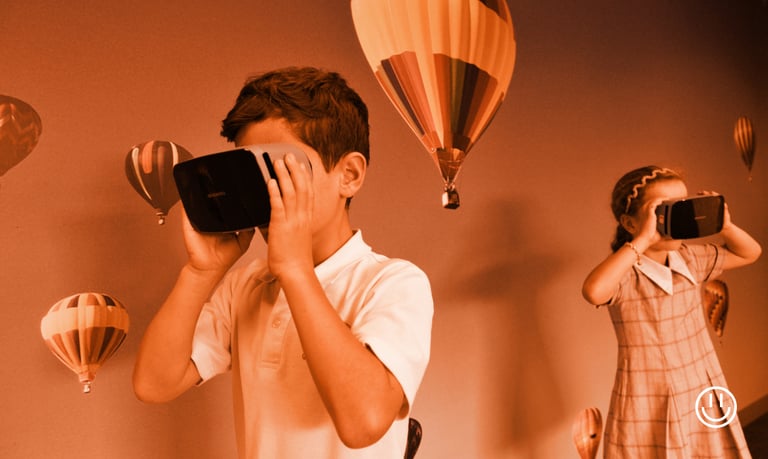
Is AI really the future? Explore how artificial intelligence is reshaping jobs, creativity, sport, and daily life — and what it means for you in 2025 and beyond.
Introduction: We're Already Living in the Future
Here's a question worth sitting with for a moment: What if the future isn't coming — what if it's already here?
Artificial intelligence is no longer science fiction. It's writing code, diagnosing diseases, composing music, and yes — even helping coaches analyze football tactics ahead of the 2026 FIFA World Cup. Teams like Argentina are using AI-powered performance tools to maintain their competitive edge, and athletes like Ronaldo work with data scientists who use machine learning to extend peak performance well into their 30s.
AI is everywhere. And it's accelerating faster than most of us realize.
Whether you're excited, nervous, or somewhere in between — understanding AI's role in our future isn't optional anymore. It's essential. So let's break it all down in plain, honest terms.
What Exactly Is Artificial Intelligence?
Before we dive into the deep end, let's get clear on what AI actually is — because the word gets thrown around constantly, often without much precision.
Artificial intelligence refers to computer systems that can perform tasks that normally require human intelligence. Things like recognizing patterns, making decisions, understanding language, and learning from experience.
There are a few key types worth knowing:
Narrow AI — Designed for one specific task (like Google's search algorithm or Netflix's recommendation engine)
General AI — A hypothetical system that thinks and reasons like a human across all domains (we're not there yet)
Generative AI — Systems like ChatGPT or DALL-E that create original content — text, images, film scripts, music, and more
Right now, we're firmly in the era of narrow and generative AI. And the impact is already enormous.
How Fast Is AI Actually Growing?
The numbers are genuinely staggering. Let's look at some real data:
The global AI market was valued at $196.6 billion in 2023 and is projected to reach $1.8 trillion by 2030 (Source: Grand View Research)
77% of devices we use today already feature some form of AI (Source: Forbes)
ChatGPT reached 100 million users in just 2 months — faster than any app in history (Source: Reuters)
By 2025, AI is expected to contribute $15.7 trillion to the global economy (Source: PwC)
These aren't small numbers. This is a technological revolution happening in real time — and it's moving at a pace that makes the internet boom of the 1990s look slow.
AI in Sport: How Argentina and Ronaldo Are Already Using It
You might not expect a conversation about AI to detour through football — but sport is actually one of the most fascinating frontiers for artificial intelligence.
Argentina, fresh from their 2022 World Cup triumph, are reportedly investing heavily in AI-driven performance analytics as they prepare for the 2026 FIFA World Cup. Their backroom staff uses machine learning to analyze opposition patterns, optimize training loads, and reduce injury risk across the squad.
And Ronaldo? His physical longevity at the highest level isn't just down to genetics or willpower. His team uses biometric data and AI-powered recovery protocols to monitor everything from sleep quality to muscle fatigue. It's why a player in his late 30s still competes at a level most footballers half his age can only dream of.
Heading into the 2026 FIFA World Cup, expect AI to play a bigger role than ever before:
Real-time tactical analysis during matches
Predictive injury modeling to keep key players fit
AI-powered scouting to identify hidden talent from smaller nations
Fan experience technology including personalized highlight reels and AI commentary
The 2026 FIFA World Cup won't just be the biggest football tournament in history — it'll be the most technologically advanced one too.
AI in Creative Industries: Film, Music, and Art
Here's where things get really interesting — and a little controversial.
AI is rapidly entering the creative space. And nowhere is this more debated than in film and entertainment.
AI as a Film Director's Tool
Imagine a director sitting down to plan a complex action sequence. Traditionally, that involves storyboarding, location scouting, and weeks of pre-production. Today, AI tools can generate visual storyboards in minutes, simulate camera angles, and even predict which film edits will perform best with test audiences.
Major film studios are already using AI for:
Visual effects generation (cutting costs significantly)
Script analysis to identify plot weaknesses
Audience prediction modeling to forecast box office performance
Deepfake and de-aging technology for actors on screen
The debate? Many directors worry that AI threatens human creativity. Others — like those who've embraced AI in their workflow — argue it's simply the most powerful tool a director has ever had access to.
The Review Problem
Here's something fascinating: AI is now writing movie reviews. Some entertainment sites use AI to generate first-draft reviews within minutes of a film's release.
Is that good or bad? Honestly, it depends on your perspective. A quick AI review gets information to readers fast. But it lacks the lived human experience, the emotional resonance, the personal connection that makes a great film review actually mean something.
That tension — between speed and soul — sits at the heart of the AI debate across every creative industry.
AI in Healthcare, Education, and Business
Football and film are compelling examples, but AI's impact runs far deeper. Let's look at three sectors where AI is genuinely changing lives:
Healthcare
AI detects certain cancers with 94% accuracy — matching or exceeding specialist doctors in some studies (Source: Nature Medicine)
Machine learning predicts patient deterioration hours before it becomes critical
Drug discovery timelines are shrinking from decades to years
Education
AI tutoring systems adapt in real time to each student's learning pace
Automated grading frees teachers to focus on human connection and mentorship
Language learning apps like Duolingo use AI to personalize lessons with remarkable effectiveness
Business
AI handles customer service, fraud detection, supply chain optimization, and financial forecasting
Small businesses now access tools that were previously only available to large corporations
Productivity gains from AI adoption are estimated at 40% improvement in many workflows (Source: McKinsey Global Institute)
The Honest Truth: What AI Cannot (Yet) Do
Let's be real here — because balance matters.
For all its power, AI has real, important limitations:
It doesn't truly understand. AI processes patterns. It doesn't comprehend meaning the way humans do.
It can be wrong — confidently. AI "hallucinations" (generating plausible but false information) remain a serious problem.
It lacks emotional intelligence. AI can simulate empathy, but it doesn't genuinely feel anything.
It reflects human bias. AI trained on biased data produces biased outputs — sometimes dangerously so.
It can't replace human creativity in its fullest sense. A director brings personal history, emotion, and moral perspective to a film that no AI can truly replicate.
Understanding these limitations isn't pessimism. It's wisdom. The people who will thrive in an AI-powered world are the ones who use it intelligently — knowing both what it can do and where it falls short.
The Jobs Question: Should You Be Worried?
Probably the most common fear around AI is this: Will it take my job?
The honest answer is nuanced.
Yes, AI will automate certain tasks and roles — particularly repetitive, data-heavy work. The World Economic Forum estimates AI could displace 85 million jobs by 2025. That's a real and serious challenge.
But here's the other side of that same report: AI is also expected to create 97 million new roles — in fields like AI training, data ethics, human-AI collaboration, and complex problem-solving.
The pattern in history is consistent. Every major technological revolution — the printing press, the industrial revolution, the internet — changed the nature of work rather than eliminating it entirely.
The key skills for an AI-augmented future include:
Critical thinking and problem-solving
Emotional intelligence and human connection
Creativity and original idea generation
AI literacy — understanding how to use and direct AI tools effectively
Adaptability and continuous learning
Should We Be Afraid of AI? A Balanced View
Some of the world's smartest people disagree sharply on this question.
Elon Musk has called AI "the most disruptive force in history." Sam Altman (CEO of OpenAI) believes AI could solve humanity's greatest challenges — from climate change to disease. Meanwhile, researchers like Geoffrey Hinton have raised serious concerns about AI safety and the long-term risks of systems we may not be able to control.
The truth probably lives somewhere between utopia and dystopia.
AI done well — with strong governance, ethical guardrails, and genuine human oversight — could lift billions out of poverty, accelerate scientific discovery, and free humans to focus on what they do best: connect, create, and care for one another.
AI done poorly — without regulation, transparency, or accountability — poses real risks to privacy, democracy, and human dignity.
The future isn't predetermined. We still get to choose what kind of AI world we build.
AI and the 2026 FIFA World Cup: A Glimpse of Tomorrow
The 2026 FIFA World Cup gives us a perfect window into AI's near future.
Forty-eight nations. Three host countries. Millions of data points generated every single match. AI systems will process all of it — in real time — to deliver insights that human analysts alone could never match.
Argentina, defending their title, will lean on every technological advantage available. So will every other serious contender.
And Ronaldo — whether he's on the pitch or watching from retirement — represents something profound about AI's role in sport. His career longevity, made possible partly through data science and AI-driven recovery methods, shows that when humans and technology work together, the results can be extraordinary.
That's the real lesson of AI's future: it's not humans versus machines. It's humans with machines — reaching further than either could alone.
Conclusion: Is AI the Future? Yes — But So Are You
So, is AI the future?
Absolutely. There's no serious argument against that at this point.
But here's what often gets lost in that conversation: you are still the most important variable in this equation.
AI will power the 2026 FIFA World Cup analytics. It will help Argentina defend their title and give Ronaldo every possible edge in his twilight years. It will reshape film, transform how directors tell stories, and change how we read a movie review before deciding what to watch on Friday night.
But AI needs human direction, human values, and human wisdom to truly flourish.
The future belongs to people who embrace AI as a tool — not as a threat. Learn it. Understand it. Use it deliberately. And never forget that the curiosity, compassion, and creativity you bring to the table are things no algorithm can replicate.
Ready to start? Pick one AI tool this week — whether it's ChatGPT, a design tool, or a productivity app — and spend 20 minutes experimenting. The learning curve is shorter than you think. And the upside is bigger than you can currently imagine.
❓ FAQ Section
Q1: Is AI really going to take over most jobs in the next 10 years?
Not exactly "take over," but AI will definitely transform most jobs. Routine, repetitive tasks are most at risk for automation. However, roles requiring creativity, emotional intelligence, complex decision-making, and human connection are far more resilient. The smartest move is to develop AI literacy alongside your existing skills — learn to work with AI tools rather than competing against them.
Q2: How is AI being used in the 2026 FIFA World Cup preparations?
Teams preparing for the 2026 FIFA World Cup — including Argentina — are using AI for performance analytics, injury prevention, tactical modeling, and opponent scouting. AI systems analyze thousands of hours of footage to identify patterns invisible to the human eye, giving coaches data-driven insights to make smarter decisions on team selection and match strategy.
Q3: Is Ronaldo using AI to extend his football career?
While Ronaldo hasn't publicly detailed every element of his recovery and training regimen, sports science experts confirm that elite athletes at his level routinely use biometric monitoring, machine learning-powered recovery protocols, and AI-driven nutritional planning. These tools help players like Ronaldo maintain extraordinary physical standards well into their late career years.
Q4: Can AI truly be creative — like writing a film script or directing a movie?
AI can generate creative content — scripts, visual concepts, music — but most experts argue it isn't truly "creative" in the human sense. It remixes and recombines patterns from its training data. A human director brings personal lived experience, moral perspective, and emotional depth that AI currently cannot replicate. The most exciting creative work today often happens when humans and AI collaborate, each contributing their unique strengths.
Q5: What's the biggest risk of AI development right now?
The biggest risks include AI bias (systems that perpetuate discrimination), misinformation (AI-generated false content at scale), privacy erosion (mass surveillance enabled by AI), and long-term alignment issues (ensuring advanced AI systems remain aligned with human values). Responsible AI development — including strong regulation, transparency, and ethical oversight — is essential to managing these risks effectively.
✅ Key Takeaways
AI is not a future concept — it's actively reshaping sport, healthcare, education, business, and creative industries right now
Argentina and Ronaldo illustrate how elite sport already uses AI-powered analytics and biometric tools to gain competitive advantages, especially ahead of the 2026 FIFA World Cup
AI in film and creative fields offers powerful tools for directors and storytellers, but human creativity, emotional depth, and lived experience remain irreplaceable
Jobs will change, not simply disappear — the most valuable skills in an AI world combine technical literacy with uniquely human qualities like empathy, creativity, and critical thinking
The future of AI depends on human choices — governance, ethics, and intentional design will determine whether AI becomes humanity's greatest asset or its most serious challenge
🔗 Suggested Linking Opportunities
Internal Links (for sports/tech crossover sites):
"How Argentina Is Preparing for the 2026 FIFA World Cup"
"Ronaldo at 40: Can He Make It to 2026?"
"Top 10 Technology Trends Changing Football Forever"
"AI Tools Every Sports Fan Should Know About"
"2026 FIFA World Cup: The Complete Guide"
External Links (authoritative sources):
McKinsey Global Institute — AI economic impact reports (mckinsey.com)
World Economic Forum — Future of Jobs Report (weforum.org)
FIFA.com — Official 2026 World Cup information and technology partnerships
MIT Technology Review — AI developments and analysis (technologyreview.com)
PwC Global AI Study — Economic contribution forecasts (pwc.com)
Written at the intersection of technology and human potential — because understanding AI isn't just smart, it's necessary.
Related Stories
Good News Ltd © 2022
Good News empowers the generation of tomorrow for a brighter future and hope for every individual.
Reframe your inbox
Subscribe to our newsletter and never miss a story.
We care about your data in our privacy policy.