
Indian Culture: Festivals, Traditions & Celebrations
CULTURE
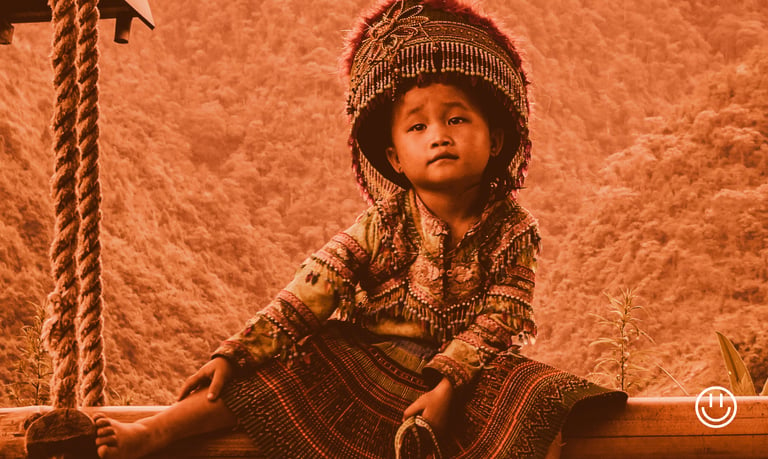
Explore the rich tapestry of Indian culture — from colorful festivals and ancient traditions to diverse celebrations that have shaped civilization for thousands of years.
Introduction: A Country That Contains the Whole World
Imagine a place where you can travel 500 kilometers in any direction and find a completely different language, cuisine, clothing style, and set of festivals — yet somehow, it all feels like one beating heart.
That place is India.
With over 1.4 billion people, 22 officially recognized languages, hundreds of dialects, and thousands of years of unbroken tradition, Indian culture isn't just rich — it's staggering in its depth and diversity. It's the oldest living civilization on Earth, and it shows in every celebration, every ritual, every hand-painted doorstep and street-side temple.
Whether you're a traveler planning your first visit, a student exploring world cultures, or simply someone curious about one of humanity's most extraordinary stories — you're in the right place.
Let's take a real, warm, honest journey through the heart of Indian culture.
What Makes Indian Culture So Unique?
Here's something that surprises many first-time visitors to India: the country doesn't have one culture. It has hundreds — layered, interwoven, sometimes contradictory, always fascinating.
Indian culture is shaped by:
Geography — from Himalayan mountain communities to tropical coastal villages, the landscape creates profoundly different ways of life
Religion — Hinduism, Islam, Christianity, Sikhism, Buddhism, Jainism, and Zoroastrianism all call India home
History — thousands of years of dynasties, trade routes, and influences from across Asia, the Middle East, and Europe
Language — India has more languages than most continents, and language shapes everything from music to marriage customs
The result is a culture that defies simple description. Every generalization you make about India has a magnificent exception somewhere.
Key fact: India recognizes 22 official languages under its constitution, but linguists estimate there are over 1,600 distinct languages and dialects spoken across the country (Source: People's Linguistic Survey of India).
The Soul of Indian Tradition: Values That Bind a Nation
Despite its extraordinary diversity, certain core values run through Indian tradition like golden threads.
Atithi Devo Bhava — The Guest Is God
Perhaps the most famous expression of Indian tradition is this ancient Sanskrit phrase: Atithi Devo Bhava — "The guest is equivalent to God."
Hospitality in India isn't just good manners. It's a deeply held spiritual obligation. When you visit an Indian home, you're offered food before conversation. You're given the best seat. Your comfort comes before the host's convenience.
This value has survived thousands of years of political upheaval, colonial rule, and modernization. It remains one of the most beautiful expressions of Indian culture today.
The Joint Family System
Indian tradition has long centered around the joint family — multiple generations living together under one roof, sharing resources, responsibilities, and daily life.
While urbanization and modern economics are gradually shifting this pattern, the joint family ideal remains deeply influential across Indian society. It shapes attitudes toward elders, child-rearing, financial decisions, and personal identity in profound ways.
Respect for Elders
In Indian culture, touching the feet of elders (pranam) as a sign of respect is practiced across regions, religions, and social classes. It's a daily, physical expression of a value system that places wisdom and age in high regard.
Indian Festivals: The World's Most Spectacular Celebrations
If there's one thing that truly captures the spirit of Indian culture for the whole world, it's the festivals. And India has more of them — and celebrates them more joyfully — than perhaps any nation on Earth.
India celebrates over 100 significant festivals annually, spanning every religion, region, and season (Source: Ministry of Culture, Government of India).
Diwali: The Festival of Lights
Diwali is arguably India's most famous festival — a five-day celebration of light over darkness, knowledge over ignorance, and good over evil.
Celebrated primarily by Hindus, Sikhs, and Jains (each for different but complementary reasons), Diwali transforms entire cities into oceans of light. Homes are decorated with diyas (clay oil lamps), fireworks light up the night sky, and families exchange sweets and gifts.
Key facts about Diwali:
Celebrated in October or November, based on the Hindu lunar calendar
The word "Diwali" derives from the Sanskrit Deepavali, meaning "row of lights"
It marks the return of Lord Rama to Ayodhya after 14 years of exile in Hindu tradition
800 million people worldwide celebrate Diwali (Source: BBC)
Holi: The Festival of Colors
If Diwali is India's most visually stunning festival, Holi might be its most joyful.
Every spring, people across India pour into the streets armed with colored powders and water guns, drenching each other in explosions of pink, yellow, green, and blue. Strangers become friends. Social barriers dissolve. For one extraordinary day, everyone is equal under a rainbow of color.
Holi celebrates the arrival of spring and the triumph of devotion over evil, rooted in the story of Prahlada and Holika from Hindu mythology.
The celebration has gone global — Holi-inspired color runs and festivals now take place in the United States, the United Kingdom, Australia, and across Southeast Asia.
Eid ul-Fitr: A Muslim Celebration of Gratitude
India is home to approximately 200 million Muslims — the world's third-largest Muslim population — and Eid ul-Fitr is one of the most important celebrations in the Indian calendar.
Marking the end of Ramadan (the holy month of fasting), Eid brings families together for communal prayers, festive meals, charitable giving (zakat), and the sharing of sewaiyan — a sweet vermicelli dish that symbolizes the joy of celebration.
In cities like Hyderabad, Lucknow, and Delhi, Eid transforms neighborhoods into magnificent open-air feasts that last for days.
Navratri and Durga Puja: Nine Nights of Divine Feminine Power
Navratri — meaning "nine nights" — is one of the most widely celebrated festivals in Indian culture, honoring the goddess Durga in her many forms.
In Gujarat, Navratri means nine nights of Garba and Dandiya dancing — massive, joyful, colorful gatherings where thousands of people dance in synchronized circles until the early hours of the morning.
In West Bengal, the same period becomes Durga Puja — a five-day festival of extraordinary artistic creation, where artisans spend months constructing elaborate clay sculptures of the goddess. The celebration culminates with processions and the immersion of the sculptures in rivers, symbolizing the goddess's return to her heavenly home.
Pongal, Onam, and Baisakhi: Regional Harvest Celebrations
India's festivals don't just follow religious calendars — they follow the rhythm of the earth itself.
Pongal (Tamil Nadu) — a four-day harvest festival celebrating the sun, rain, and the earth's abundance. Families cook the first rice of the harvest in clay pots, allowing it to boil over as a symbol of prosperity.
Onam (Kerala) — a ten-day harvest celebration featuring elaborate flower carpets (pookalam), traditional boat races, and a massive feast (Sadya) served on banana leaves with up to 26 different dishes.
Baisakhi (Punjab) — marks the harvest season and the founding of the Sikh Khalsa in 1699. Celebrated with bhangra dancing, communal prayers, and fairs that bring entire communities together.
Each of these festivals tells you something essential about the region that created it — its landscape, its history, its people.
Indian Art, Music, and Dance: Culture in Motion
Indian culture isn't just something you observe — it's something you experience through its extraordinary artistic traditions.
Classical Dance Forms
India has eight officially recognized classical dance forms, each originating from a different region and carrying centuries of tradition:
Bharatanatyam (Tamil Nadu) — the oldest classical dance, combining precise footwork with expressive storytelling
Kathak (North India) — characterized by fast spins and rhythmic footwork, showing Persian and Hindu influences
Odissi (Odisha) — fluid, lyrical movements inspired by temple sculptures
Kathakali (Kerala) — elaborate costumes and makeup tell stories from Hindu epics
Manipuri (Manipur) — gentle, circular movements celebrating devotion to Krishna
Kuchipudi (Andhra Pradesh) — dramatic storytelling with distinctive fast-paced sequences
Mohiniyattam (Kerala) — graceful, feminine movements inspired by the enchantress Mohini
Sattriya (Assam) — monastic dance-drama from Vaishnavite monasteries
Music: From Classical Ragas to Bollywood
Indian classical music — divided into Hindustani (North) and Carnatic (South) traditions — is one of the world's most sophisticated musical systems. Built around ragas (melodic frameworks) and talas (rhythmic cycles), it creates music designed not just to entertain but to evoke specific emotions and even times of day.
And then there's Bollywood — India's film industry and perhaps its most globally recognized cultural export. Bollywood produces over 1,800 films per year (Source: FICCI), more than any other national film industry in the world.
Indian Cuisine: A Celebration on Every Plate
You genuinely cannot talk about Indian culture without talking about food. Because in India, food is culture.
Every region has its own culinary identity:
North India — rich curries, tandoor breads (naan, roti), butter chicken, and biryani
South India — rice-based dishes, coconut-infused curries, dosas, idlis, and sambar
West India — Maharashtra's spicy street food, Gujarat's sweet-savory vegetarian cuisine, Goa's seafood and Portuguese-influenced dishes
East India — Bengal's fish curries and mishti doi (sweetened yogurt), Assam's smoky bamboo-shoot dishes
Indian spices — turmeric, cardamom, cumin, coriander, and dozens more — don't just flavor food. They carry medicinal significance rooted in Ayurveda, India's ancient system of holistic health that is experiencing a global revival today.
Indian Traditions Around Life's Big Moments
In Indian culture, the major milestones of life — birth, coming of age, marriage, and death — are wrapped in rich ritual and celebration.
Marriage: India's Greatest Festival
Indian weddings are legendary — and for good reason. A traditional Indian wedding isn't a single event. It's a series of celebrations spanning several days:
Mehendi — intricate henna designs applied to the bride's hands and feet
Sangeet — a musical evening of dancing and singing by both families
Haldi — turmeric paste applied to the couple for purification and blessing
The main ceremony — specific rituals vary by religion and region, but all center on sacred vows and community witness
Reception — a grand celebration bringing extended family and community together
The average Indian wedding involves 200–500 guests, and many involve far more (Source: The Wedding Brigade Industry Report).
Why Indian Culture Matters to the Whole World
Here's something worth reflecting on: Indian culture isn't just India's story. It's humanity's story.
Yoga — now practiced by 300 million people globally (Source: Yoga Alliance) — originated in ancient Indian tradition thousands of years ago.
The concept of zero, fundamental to all modern mathematics and computing, was developed by Indian mathematicians.
Buddhism, which spread across Asia and now counts 500 million followers worldwide, was born in India.
Indian philosophy, literature, and tradition have shaped thinkers from Thoreau to Einstein, from the Beatles to Steve Jobs.
When you explore Indian culture, you're not just discovering one country's heritage. You're touching one of the deepest roots of human civilization itself.
Conclusion: Indian Culture Is an Invitation
Indian culture — with its kaleidoscope of festivals, its ancient traditions, its joyful celebrations, and its extraordinary artistic heritage — is not something you can fully understand from the outside.
It invites you in. It asks you to sit down and share a meal, to join a dance, to light a diya, to smear color on a stranger's face and laugh together in the street.
Whether your connection to Indian culture is ancestral, academic, or purely born of curiosity — the door is always open. The chai is always hot. And the celebration, in one form or another, is always just around the corner.
Ready to explore further? Start by attending a local Diwali or Holi event in your city — most major urban centers around the world now host these festivals publicly. Or dive into Indian cinema, cuisine, or classical music this week. Every entry point leads deeper into one of history's most magnificent cultural journeys.
❓ FAQ Section
Q1: How many festivals does India celebrate each year?
India celebrates an extraordinary number of festivals — estimates suggest over 100 significant festivals annually at the national level, with thousands more regional and local celebrations happening throughout the year. Because India's festivals span Hindu, Muslim, Christian, Sikh, Buddhist, and Jain traditions, virtually every month of the year contains major celebrations. This is why India is often called "the land of festivals."Q2: What are the most important traditions in Indian culture?
Several traditions are particularly central to Indian culture across regions and religions. These include Atithi Devo Bhava (treating guests with divine hospitality), the joint family system, respect for elders expressed through pranam (touching feet), arranged marriage customs (though increasingly modernized), Ayurvedic health practices, and the ritual significance of food sharing. While modernization is reshaping some of these traditions, their influence remains strong across Indian society.Q3: How does Indian culture vary from region to region?
Indian culture varies enormously by region — so much so that traveling from one state to another can feel like visiting a different country. North India is characterized by Mughal-influenced architecture, Hindustani classical music, and wheat-based cuisine. South India has Dravidian temple architecture, Carnatic music, and rice-based food traditions. The Northeast features tribal cultures with unique textile and dance traditions. The West balances ancient maritime trading culture with vibrant folk arts. This regional diversity is one of Indian culture's most celebrated characteristics.Q4: Why is Diwali celebrated, and how is it observed globally?
Diwali is celebrated for different reasons by different communities. For Hindus, it marks Lord Rama's return to Ayodhya after defeating the demon king Ravana. For Sikhs, it commemorates the release of Guru Hargobind Ji from imprisonment. For Jains, it marks the spiritual liberation (moksha) of Lord Mahavira. Globally, Diwali is now officially recognized in the United States, United Kingdom, and several other countries. Cities including New York, London, and Toronto hold public Diwali celebrations drawing hundreds of thousands of visitors annually.Q5: What is the global influence of Indian culture today?
Indian culture's global influence is profound and growing. Yoga is practiced by 300 million people worldwide. Bollywood films reach audiences across Asia, Africa, the Middle East, and increasingly the West. Indian cuisine is among the most popular in the world, with Indian restaurants found in virtually every major city. Indian philosophy has influenced Western spirituality, mindfulness practices, and self-help movements. The Indian diaspora — over 32 million people living outside India (Source: Ministry of External Affairs, India) — carries and evolves Indian cultural traditions across every continent.✅ Key Takeaways
Indian culture is not one culture but hundreds — shaped by geography, religion, language, and thousands of years of history, creating extraordinary regional diversity within a unified national identity
Indian festivals — from Diwali and Holi to Eid, Onam, and Durga Puja — represent some of humanity's most joyful and visually magnificent celebrations, observed by billions of people worldwide
Core Indian traditions like hospitality, family values, and respect for elders have survived millennia of change and remain central to daily life across the country
Indian culture's global footprint is massive — yoga, mathematics, philosophy, cuisine, classical arts, and Bollywood have all shaped world culture in lasting, measurable ways
Experiencing Indian culture firsthand — through festivals, food, music, or travel — reveals a warmth, depth, and joy that no description fully captures
🔗 Suggested Linking Opportunities
Internal Links (for travel/culture sites):
"Complete Guide to Celebrating Diwali: Traditions, Food & Meaning"
"Holi Festival 2025: Where to Celebrate Around the World"
"Indian Wedding Traditions Explained: A Complete Cultural Guide"
"Best Indian Regional Cuisines: A Food Lover's Journey"
"Classical Dance Forms of India: A Beginner's Visual Guide"
External Links (authoritative sources):
Ministry of Culture, Government of India (indiaculture.gov.in)
UNESCO Intangible Cultural Heritage — Indian entries (ich.unesco.org)
People's Linguistic Survey of India — language diversity data
Yoga Alliance — Global yoga statistics (yogaalliance.org)
BBC Culture — Indian festivals and traditions coverage (bbc.com/culture)
National Geographic — India cultural photography and features (nationalgeographic.com)
Related Stories
Good News Ltd © 2022
Good News empowers the generation of tomorrow for a brighter future and hope for every individual.
Reframe your inbox
Subscribe to our newsletter and never miss a story.
We care about your data in our privacy policy.