
Benefits of Swimming: Why This Sport Changes Your Life
SPORT
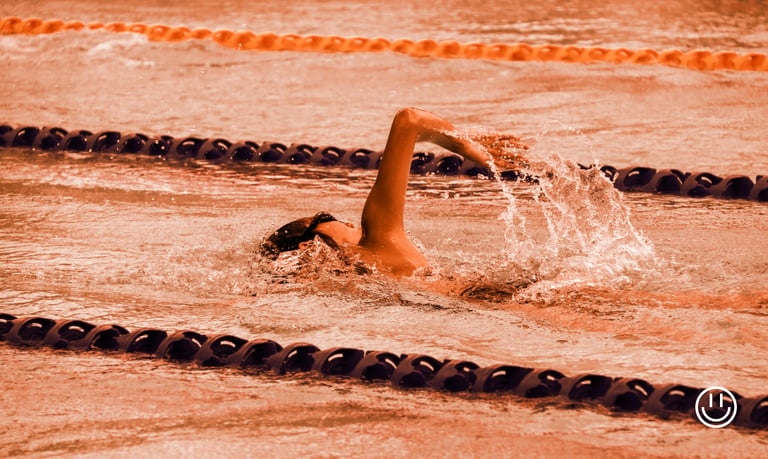
Discover the incredible benefits of swimming — the sport that builds strength, protects joints, boosts mental health, and transforms your body at any age.
Introduction: The Sport That Works for Absolutely Everyone
What if there was a single sport that burned serious calories, built full-body strength, protected your joints, reduced anxiety, improved your heart health, and genuinely made you feel better — all at the same time?
You'd probably think it sounds too good to be true.
But swimming is exactly that. And unlike most fitness trends that come and go, swimming has been delivering extraordinary results for thousands of years. From ancient civilizations to modern Olympic arenas, this sport has stood the test of time for one simple reason: it works.
Whether you're 8 or 80, a competitive athlete or someone who just wants to move without pain — swimming meets you exactly where you are. No other sport can honestly make that claim.
Ready to find out what you've been missing? Let's dive in.
Why Swimming Is Called the Perfect Sport
Personal trainers, physiotherapists, cardiologists, and mental health professionals all tend to agree on very few things. But swimming? That's one area where the experts are remarkably united.
The American College of Sports Medicine lists swimming as one of the top recommended exercises for overall health across all age groups. Here's why it earns that distinction:
It provides cardiovascular and muscular training simultaneously
It's low-impact — meaning your joints take almost no punishment
It burns significant calories without feeling like punishment
It works virtually every major muscle group in a single session
It's scalable — you can go easy or go hard, and both deliver results
It's genuinely accessible — pools exist in almost every community worldwide
No other single sport ticks all of those boxes at once. Running destroys your knees. Weightlifting ignores your cardio. Cycling skips your upper body. Swimming does it all.
The Physical Benefits of Swimming: What Actually Happens to Your Body
Let's get specific. Because when you understand exactly what swimming does to your body, the motivation to get in the pool becomes much harder to ignore.
It Gives You a Full-Body Workout Every Single Time
Every stroke in swimming — freestyle, backstroke, breaststroke, butterfly — recruits multiple muscle groups working in coordination.
A single freestyle session works your:
Shoulders and arms — through the pull phase of each stroke
Core — constantly engaged for rotation and stability
Back muscles — lats, rhomboids, and trapezius all fire with every stroke
Legs — the flutter kick drives propulsion from hip flexors to calves
Glutes — activated during turns, kicks, and body rotation
Compare that to a typical gym session where most people focus on 2–3 muscle groups per visit. Swimming covers the whole map in 45 minutes.
Swimming Burns More Calories Than You Think
Here's something that surprises most beginners: swimming is a serious calorie burner.
According to Harvard Medical School, a 155-pound person burns approximately:
528 calories per hour swimming at a moderate pace
670 calories per hour swimming vigorously
That compares favorably to running (around 600 calories/hour) — but without a single bone-jarring impact on your joints.
And because swimming builds lean muscle mass simultaneously, your resting metabolic rate increases over time. You burn more calories even when you're not in the pool. That's the kind of compounding benefit most sports simply can't offer.
It's the Best Sport for Your Heart and Lungs
Swimming is one of the most powerful cardiovascular exercises known to sports science.
Regular swimming strengthens the heart muscle, increases stroke volume (how much blood your heart pumps per beat), and improves lung capacity through rhythmic, controlled breathing patterns.
The statistics are compelling:
Regular swimmers have 53% lower mortality rates than sedentary people (Source: British Journal of Sports Medicine)
Swimming reduces the risk of heart disease by up to 41% (Source: International Journal of Aquatic Research and Education)
Just 30 minutes of swimming three times per week significantly lowers blood pressure in hypertensive adults (Source: American Heart Association)
Your heart and lungs genuinely don't know a better workout.
It Protects Your Joints While Building Strength
This is the benefit that changes lives — particularly for older adults, people recovering from injuries, and anyone with arthritis or chronic joint pain.
In water, your body becomes approximately 90% lighter due to buoyancy (Source: Aquatic Exercise Association). That means your knees, hips, spine, and ankles bear almost none of the stress they experience during land-based exercise.
Yet the water's resistance — which is 12 times denser than air — still provides substantial muscular challenge. You build real strength without the wear and tear that eventually sidelines so many runners and gym-goers.
Physiotherapists regularly prescribe swimming and water-based exercise as rehabilitation for:
Knee and hip replacements
Lower back injuries
Arthritis (both osteo and rheumatoid)
Sports injury recovery
Fibromyalgia management
It's the sport that lets your body exercise when everything else hurts.
The Mental Health Benefits of Swimming: More Than Just Physical
Here's where swimming genuinely separates itself from most other sports — and it's a conversation that deserves more attention than it typically gets.
Swimming Reduces Stress and Anxiety
There's a reason people describe stepping into a pool and immediately feeling their shoulders drop.
Swimming triggers the release of endorphins — your brain's natural mood elevators — while simultaneously reducing cortisol (the stress hormone). The rhythmic, repetitive nature of each stroke creates a meditative effect that quiets mental chatter in a way that's genuinely difficult to replicate on land.
A study published in the journal Physiology & Behavior found that swimming significantly reduced anxiety and improved mood in participants — even after just a single session.
It Sharpens Your Mind and Improves Sleep
Regular swimming increases blood flow to the brain, which research links to improved memory, concentration, and cognitive function.
One remarkable study from Griffith University (Australia) found that children who learned to swim earlier reached developmental milestones — including language development, math skills, and physical coordination — significantly faster than non-swimmers.
The benefits extend throughout life. Adults who swim regularly report better sleep quality, sharper focus at work, and lower rates of depression — benefits that rival antidepressant medication in some studies (Source: Anxiety and Depression Association of America).
The Meditative Power of Being in Water
Ask any regular swimmer what they think about in the pool, and many will tell you: nothing. Or everything. But differently.
The combination of water immersion, rhythmic movement, controlled breathing, and sensory isolation creates a state that neuroscientists describe as similar to meditation. You literally cannot scroll through your phone while swimming. You cannot respond to emails. You are, for that hour, completely and entirely present.
In a world of constant digital distraction, that forced presence is genuinely therapeutic. It's why so many people describe swimming not just as exercise, but as their sanity anchor.
Swimming for Weight Loss: What the Science Says
Can swimming help you lose weight? Yes — with one important nuance worth understanding.
Swimming is excellent for:
Burning significant calories per session
Building lean muscle mass that increases resting metabolism
Reducing inflammation linked to obesity
Improving insulin sensitivity which supports healthy body composition
The nuance: some research suggests that cold water swimming can increase appetite after sessions, potentially leading people to eat back the calories they burned. The practical solution is simple:
Track your post-swim nutrition — be mindful of what you eat after training
Combine swimming with dietary awareness — not obsessive restriction, just honest attention
Stay consistent — the body composition benefits of regular swimming compound over months, not weeks
Many world-class athletes maintain extraordinary physiques through swimming as their primary sport — Michael Phelps, Katie Ledecky, and Adam Peaty are living proof that the body built by consistent swimming is something genuinely remarkable.
Swimming at Every Age: A Sport for Life
One of swimming's most extraordinary qualities is that it truly has no age limit. It's one of the only sports where a 70-year-old and a 7-year-old can genuinely improve together.
For Children
Develops coordination, balance, and spatial awareness
Teaches a potentially life-saving skill (drowning is a leading cause of accidental death in children)
Builds confidence and social skills through team and group swimming
Establishes healthy exercise habits early in life
For Adults
Manages weight, stress, and cardiovascular health simultaneously
Provides a sustainable exercise option that doesn't destroy joints over time
Offers a social outlet through masters swimming programs and water fitness classes
For Older Adults
Maintains muscle mass and bone density that naturally decline with age
Reduces fall risk by improving balance and proprioception
Manages arthritis pain with gentle, resistance-based movement
Studies show regular swimming in older adults is associated with better balance, lower mortality risk, and improved cognitive function (Source: Journal of Aging and Physical Activity)
Different Swimming Strokes and What Each One Does
Not all swimming is the same. Different strokes target different muscles and deliver different intensities:
Freestyle (front crawl) — The fastest stroke, excellent for cardiovascular fitness and full-body conditioning. Best for calorie burning.
Backstroke — Great for back muscles and posture. Easier on the neck and shoulders for beginners.
Breaststroke — The slowest stroke but excellent for inner thighs, chest, and core. Gentlest on the shoulders.
Butterfly — The most demanding stroke, delivering an intense full-body workout. Not for beginners, but extraordinarily effective for strength and power.
Mixing strokes in a single session — called a "medley" workout — delivers the most comprehensive full-body benefits and keeps training interesting.
How to Start Swimming: Practical Tips for Beginners
If you haven't swum regularly since childhood (or ever), getting started feels daunting. Here's how to make it simple:
Find your local pool — most communities have public pools with lap swimming sessions and beginner programs
Invest in basic gear — a proper swimsuit, goggles, and a swim cap make a huge difference in comfort
Start with 20-minute sessions — three times a week is enough to begin feeling results
Learn proper technique early — even one lesson with a qualified instructor prevents bad habits that slow your progress
Use rest intervals — swim a length, rest 30 seconds, repeat. Build endurance gradually
Track your progress — note your distances and times weekly. The improvement curve in swimming is genuinely motivating
Join a masters swimming group — the community and coaching make the sport far more enjoyable and sustainable
Conclusion: Swimming Is the Sport Your Body Has Been Waiting For
Let's be honest about what we've covered here. Swimming isn't just good exercise. It's arguably the most complete sport available to human beings of any age, fitness level, or physical condition.
It strengthens your heart. It builds lean muscle. It protects your joints. It burns serious calories. It reduces stress, sharpens your mind, and improves your sleep. It's a sport you can practice at 6 years old and still genuinely enjoy and benefit from at 86.
No other sport delivers that spectrum of benefits without significant trade-offs.
The only real barrier between you and everything swimming offers is the edge of the pool.
So here's your call to action: Find a local pool this week. Book a lane. Buy the goggles. Take the first stroke. Your body — and your mind — will thank you in ways you can't fully imagine until you're already in the water.
The best sport you'll ever try is waiting for you.
❓ FAQ Section
Q1: How many times a week should I swim to see real benefits?
Research suggests that swimming just 3 times per week for 30–45 minutes per session delivers measurable cardiovascular, muscular, and mental health benefits within 4–6 weeks. More frequent swimming (4–5 times weekly) accelerates results, but consistency over months matters far more than frequency in any single week. Even twice-weekly swimming produces significant health improvements compared to a sedentary lifestyle, making it one of the most accessible sports for busy schedules.
Q2: Is swimming good for weight loss, or does it make you hungrier?
Swimming is excellent for weight loss — it burns 400–700 calories per hour while building lean muscle that increases your resting metabolism. The "swimming makes you hungrier" concern has some research backing, particularly with cold water swimming. The practical solution is mindful post-swim nutrition — choosing protein-rich foods that satisfy without overcorrecting for calories burned. Consistently combining regular swimming with balanced eating produces reliable, sustainable weight loss results for most people.
Q3: Can swimming help with back pain and arthritis?
Absolutely — and this is one of swimming's most celebrated benefits. Water buoyancy reduces body weight by approximately 90%, eliminating the compressive forces on joints and the spine that make land exercise painful for arthritis and back pain sufferers. The water's resistance simultaneously strengthens the muscles supporting those joints. Physiotherapists and rheumatologists worldwide regularly prescribe swimming and hydrotherapy as first-line treatments for arthritis, chronic back pain, and post-surgical rehabilitation.
Q4: What swimming stroke is best for beginners?
Freestyle (front crawl) and backstroke are generally recommended for beginners. Freestyle is the most efficient stroke for fitness and calorie burning once technique is established. Backstroke is gentler on the shoulders and allows easier breathing, making it comfortable for newcomers. Breaststroke is also popular for beginners due to its slower pace, though the knee mechanics require proper technique to avoid strain. Butterfly should be learned later, as it demands significant strength and coordination.
Q5: At what age can children start learning to swim?
Most swimming associations recommend introducing children to water from 6 months of age for parent-and-child water familiarization classes. Formal swimming lessons typically begin around 3–4 years old, when children have developed sufficient motor control and attention span to learn basic skills. The American Academy of Pediatrics recommends swim lessons for all children aged 1–4 as a drowning prevention measure. Earlier swimming exposure is associated with faster developmental milestone achievement in language, coordination, and mathematics.
✅ Key Takeaways
Swimming is the most complete sport available — simultaneously delivering cardiovascular fitness, full-body strength, calorie burning, and joint protection in a single session
The mental health benefits of swimming — including reduced anxiety, improved mood, better sleep, and enhanced cognitive function — rival its physical benefits and are often underappreciated
Swimming burns 400–700 calories per hour while building lean muscle that increases resting metabolism, making it one of the most effective sports for sustainable weight management
The joint-protective nature of swimming makes it uniquely valuable for older adults, injury recovery patients, and anyone with arthritis or chronic pain who struggles with land-based exercise
Swimming is genuinely a sport for life — with proven benefits for children's development, adult fitness and stress management, and older adult longevity and cognitive health
🔗 Suggested Linking Opportunities
Internal Links (for health/fitness sites):
"Swimming vs Running: Which Sport Is Better for Your Health?"
"How to Improve Your Swimming Technique: Beginner's Complete Guide"
"Best Swimming Workouts for Weight Loss (With Weekly Plan)"
"Open Water Swimming: Benefits, Safety Tips, and How to Start"
"Aquatic Exercise for Arthritis: A Complete Guide"
External Links (authoritative sources):
American Heart Association — Swimming and cardiovascular health (heart.org)
Harvard Medical School — Calorie burning data and exercise recommendations (health.harvard.edu)
British Journal of Sports Medicine — Swimming mortality research (bjsm.bmj.com)
Aquatic Exercise Association — Aquatic fitness guidelines (aeawave.com)
USA Swimming Foundation — Learn-to-swim resources (usaswimming.org)
World Health Organization — Physical activity guidelines (who.int)
Written for anyone who has ever stood at the edge of a pool and wondered whether the jump was worth it — it always is.
Related Stories
Good News Ltd © 2022
Good News empowers the generation of tomorrow for a brighter future and hope for every individual.
Reframe your inbox
Subscribe to our newsletter and never miss a story.
We care about your data in our privacy policy.