
Benefits of Skating: Why This Sport Is Worth It
SPORT
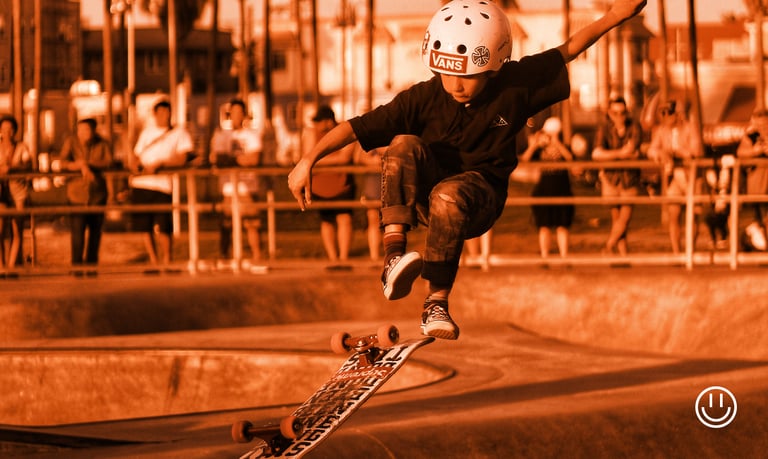
Discover the amazing benefits of skating — the sport that builds strength, balance, confidence, and joy for kids and adults alike. Start rolling toward better health!
Introduction: The Sport That Makes Exercise Feel Like Pure Fun
Here's a question worth asking yourself honestly: When was the last time you were so absorbed in physical activity that you completely forgot you were exercising?
For millions of people around the world, skating does exactly that. Whether it's gliding across ice, carving smooth asphalt on roller skates, or landing tricks at the local skate park, skating is the rare sport that disguises a seriously effective workout inside something that just feels like playing.
And the numbers back this up. Over 50 million people skate regularly worldwide (Source: Roller Sports International). The sport spans generations, cultures, and fitness levels — from 5-year-olds finding their ice legs to 60-year-olds who've been inline skating for decades and have no intention of stopping.
So what exactly does skating do for your body and mind? More than most people realize. Let's break it all down.
What Makes Skating Unique Among All Sports?
Before diving into the specific benefits, it's worth understanding why skating delivers such remarkable results.
Unlike most conventional exercises, skating combines three elements simultaneously:
Cardiovascular training — your heart rate elevates and stays elevated throughout
Strength and muscle building — your legs, core, and stabilizing muscles work continuously
Balance and coordination training — your neuromuscular system gets a constant workout just keeping you upright
Most sports deliver one or two of these. Skating delivers all three — and wraps them in an experience most people genuinely want to repeat. That last part matters more than people realize. The best exercise is the one you'll actually do consistently.
The Physical Benefits of Skating: What Science Says
It's a Powerful Cardiovascular Workout
Let's get the heart pumping — literally.
Skating is an outstanding aerobic exercise that challenges your cardiovascular system in ways that rival running, cycling, and rowing. Your heart rate during moderate skating typically reaches 140–180 beats per minute — squarely in the aerobic training zone that strengthens the heart muscle and improves lung capacity.
According to the American Heart Association, inline skating is a comparable cardiovascular workout to running, making it one of the most effective heart-healthy sports available (Source: American Heart Association Journal).
Regular skating delivers:
Lower resting heart rate over time
Reduced blood pressure in hypertensive individuals
Improved cholesterol levels
Stronger heart muscle with greater stroke volume
Better overall cardiovascular endurance
And because skating is genuinely enjoyable, people tend to sustain it longer per session than they would on a treadmill. More time in the aerobic zone means more cardiovascular benefit — simple as that.
Skating Burns Serious Calories
Think skating is just casual cruising? Think again.
Harvard Medical School estimates that a 155-pound person burns approximately:
548 calories per hour inline skating at moderate intensity
600+ calories per hour at vigorous intensity
387 calories per hour recreational ice skating
450+ calories per hour aggressive ice skating or hockey
That puts skating in the same calorie-burning territory as running — but with dramatically less impact on your joints. For anyone trying to manage weight or improve body composition, skating offers a compelling alternative to high-impact cardio options.
It Builds Strong Legs and a Powerful Core
Every push, glide, and turn in skating recruits the major muscle groups of your lower body:
Quadriceps — fire during the push-off phase and absorb impact during landing
Hamstrings — activated through the recovery phase of each stride
Glutes — powerfully engaged during lateral pushes and deep skating strides
Hip abductors and adductors — critical for lateral movement and stability
Calves — constantly working to control blade or wheel contact with the surface
But here's what surprises most new skaters: the core workout is extraordinary.
Maintaining balance on skates requires constant micro-adjustments from your abdominal muscles, obliques, and lower back. Your core isn't just occasionally engaged — it's working the entire time. That's why experienced skaters tend to develop strong, functional core strength without ever doing a single sit-up.
Low-Impact Exercise That Protects Your Joints
One of skating's most underappreciated physical benefits is what it doesn't do to your body.
Unlike running — where each footstrike delivers a force equivalent to 2–3 times your body weight through your knees and hips — skating uses a smooth, gliding motion that distributes forces more evenly and eliminates the sharp impact peaks that cause joint damage over time.
Research from the University of Massachusetts found that inline skating produces 50% less joint stress than running at equivalent speeds and intensities (Source: Journal of Orthopaedic & Sports Physical Therapy).
This makes skating an exceptional option for:
People with knee pain or early-stage arthritis
Runners looking for cross-training that gives joints a break
Older adults who want to maintain fitness without injury risk
Anyone recovering from lower-body injuries (under physiotherapy guidance)
Balance, Coordination, and Brain Benefits
Here's where skating genuinely stands apart from almost every other popular fitness activity.
Skating Trains Your Brain as Much as Your Body
Every moment on skates challenges your proprioception — your body's internal sense of position and movement in space. This is the system that tells you where your limbs are without looking at them, and it's critical for balance, coordination, and fall prevention throughout life.
Skating provides constant proprioceptive training because:
Your base of support is narrow and constantly moving
You must continuously adjust to changing surfaces and speeds
Every turn, stop, and trick requires precise neuromuscular coordination
Your body learns to process balance feedback faster and more accurately
Studies show that activities requiring balance and coordination — like skating — stimulate the development of new neural pathways, effectively making your brain more adaptive and responsive (Source: Neuropsychologia journal).
It Improves Posture and Body Awareness
Good skating technique requires an upright, engaged posture — slight forward lean, chest open, core tight, eyes ahead. Practice that posture for an hour several times a week, and your body starts carrying it into everyday life.
Many regular skaters report significant improvements in their daily posture, reduced back pain, and a stronger sense of physical self-awareness — all side effects of teaching your nervous system to find balance and alignment automatically.
The Mental and Emotional Benefits of Skating
Physical benefits get most of the attention, but the mental health case for skating is equally compelling.
Skating Obliterates Stress
There's something about the speed, the rhythm, and the focus required for skating that creates a powerful mental escape from daily pressure.
When you're navigating a skate park, finding your rhythm on an ice rink, or cruising a bike path on rollerblades, your brain simply cannot simultaneously worry about your inbox, your mortgage, or tomorrow's meeting. The sport demands full presence — and that enforced mindfulness has genuine therapeutic value.
Research consistently shows that physical activity combining rhythm, coordination, and moderate challenge — all hallmarks of skating — produces the greatest reductions in anxiety and stress hormones (Source: Journal of Sport and Exercise Psychology).
It Builds Confidence in a Very Real Way
Think about what skating actually asks of you: you strap wheels or blades to your feet — things your body was never designed for — and you learn to move gracefully anyway.
Every skill mastered in skating represents a genuine victory against uncertainty and fear. That first time you skate backwards. The day you land a trick you've been practicing for weeks. The moment the rink stops being terrifying and starts being yours.
That kind of earned confidence — built through real effort and real falls — transfers powerfully into everyday life. It teaches you that discomfort is temporary, that failure is part of learning, and that persistence genuinely pays off.
The Social Benefits Are Real and Significant
Skating is deeply social in ways that solo gym sessions simply aren't.
Ice rinks are community gathering spaces
Skate parks create organic friendships between people of wildly different backgrounds
Roller derby teams build extraordinary camaraderie through shared challenge
Group skating classes connect beginners who laugh through their struggles together
Social connection is one of the most powerful predictors of long-term health and happiness — and skating creates it naturally, without effort or awkwardness.
Types of Skating and Their Unique Benefits
Not all skating is the same. Here's a quick overview of the main types and what each delivers:
Ice Skating
Exceptional for leg strength and cardiovascular fitness
Develops extraordinary balance and edge control
Includes figure skating (artistic, technical) and speed skating (endurance-focused)
Available seasonally outdoors; indoor rinks offer year-round access
Inline Skating (Rollerblading)
Closest to ice skating in muscle recruitment and movement patterns
Excellent outdoor cardio and fitness sport
Popular for urban commuting, fitness training, and recreational cruising
Used by NHL players as off-ice training cross-training
Roller Skating (Quad Skating)
Wider wheel base makes it more stable for beginners
Incredible resurgence in popularity through roller disco and roller derby
Strong cardiovascular and lower-body conditioning sport
Highly social — roller rinks remain beloved community spaces
Skateboarding
Dramatically different skill profile — tricks, jumps, grinds, and ramps
Exceptional for balance, body awareness, and creative expression
Builds remarkable mental resilience through the process of falling and trying again
Olympic sport since Tokyo 2020 — now one of the fastest-growing youth sports globally
Skating for Kids: Why Parents Should Pay Attention
If you have children and you're wondering whether skating is worth the investment of time, gear, and the occasional scraped knee — the evidence says yes, strongly.
Skating benefits children in ways that extend far beyond fitness:
Physical development — builds coordination, balance, and motor skills faster than many other childhood activities
Confidence and resilience — learning to fall safely and get back up is one of childhood's most valuable lessons
Screen-time alternative — provides compelling, joyful physical activity that competes genuinely with digital entertainment
Social skills — skate parks and rinks are natural social environments where kids build friendships organically
Academic performance — regular physical activity is linked to improved concentration and academic achievement (Source: Centers for Disease Control and Prevention)
The sport also teaches something quietly profound: that mastery takes time, practice, and patience. That lesson, learned through skating, shapes character in ways that last a lifetime.
How to Get Started with Skating Safely
Ready to give skating a genuine try? Here's how to start smart:
Essential safety gear (non-negotiable for beginners):
Helmet — protects against the falls that will happen
Wrist guards — wrists are the most commonly injured body part in skating
Knee pads and elbow pads — especially important for skateboarding and roller skating
Practical starter tips:
Choose the right type of skating for your goals — fitness focus suggests inline skating; social/fun focus might mean roller skating; creativity and tricks point to skateboarding
Invest in quality beginner skates — cheap beginner skates often make learning harder. Visit a specialist shop for proper fitting advice
Take a lesson or two — even one session with an instructor establishes proper technique and prevents bad habits
Learn to fall safely first — bending knees, protecting wrists, and falling sideways rather than backward reduces injury risk dramatically
Start on smooth, flat surfaces — master basic balance and stopping before tackling hills, tricks, or busy paths
Progress gradually — the biggest mistake beginners make is advancing too quickly before fundamentals are solid
Conclusion: The Sport That Gives Back Everything You Put In
Skating is one of the most complete, joyful, and genuinely rewarding sports a human being can pursue. It builds cardiovascular strength, lean muscle, and powerful legs. It develops extraordinary balance, coordination, and brain health. It reduces stress, builds confidence, and creates community.
And perhaps most importantly — it's fun. Genuinely, sustainably, irresistibly fun in a way that makes you actually want to lace up again tomorrow.
In a world where most people struggle to maintain consistent exercise habits, skating solves the problem at its root. When exercise feels like joy rather than obligation, consistency takes care of itself.
So here's the honest truth: whatever form of skating appeals to you — ice, inline, roller, or skate park — the benefits are waiting on the other side of your first wobbly session.
Your next step is simple: Find your nearest rink, skate park, or smooth path. Rent or borrow skates. Gear up safely. Take the first stride. Fall if you need to. Get up. Try again.
The sport that could genuinely change your health, your confidence, and your relationship with movement is right there — and it's been waiting for you.
❓ FAQ Section
Q1: Is skating a good sport for weight loss?
Yes — skating is an excellent sport for weight loss. Depending on intensity, a person burns between 387–600+ calories per hour skating, comparable to running but with significantly less joint impact. More importantly, skating builds lean muscle mass that raises your resting metabolic rate, helping you burn more calories even outside of sessions. Because skating is genuinely enjoyable, people sustain it longer and more consistently than traditional cardio options — and consistency is the single most important factor in successful, lasting weight loss.
Q2: Is skating safe for older adults?
Skating can be safely enjoyed by older adults with appropriate precautions. The key priorities are: wearing full protective gear (helmet, wrist guards, knee pads), starting in controlled environments like smooth rinks rather than outdoor terrain, taking lessons to establish proper technique, and choosing lower-impact styles like recreational inline or roller skating rather than aggressive trick skating. The joint-protective nature of skating — producing 50% less joint stress than running — actually makes it an excellent fitness option for older adults seeking effective, low-impact cardiovascular exercise.
Q3: What type of skating is best for fitness?
Inline skating (rollerblading) and ice skating deliver the highest cardiovascular and muscular conditioning benefits, closely followed by roller skating. Inline skating in particular is used by professional athletes — including NHL hockey players — as serious cross-training because it so effectively replicates the demands of ice skating. Skateboarding provides excellent balance, coordination, and full-body strength training but is lower in cardiovascular intensity during trick-focused sessions. For pure fitness, 45–60 minutes of sustained inline or ice skating at moderate-to-vigorous intensity delivers outstanding results.
Q4: At what age can children start learning to skate?
Most children can begin basic skating introduction around ages 3–4 for ice skating and roller skating, when they have sufficient balance and motor development for guided learning. Skateboarding typically suits children from around age 5–6, when coordination and spatial awareness are more developed. The key at young ages is making it playful and pressure-free — children who associate skating with fun rather than performance pressure develop skills faster and stay with the sport longer. Always ensure age-appropriate safety equipment from the very first session.
Q5: How does skating compare to running for cardiovascular fitness?
Skating and running deliver comparable cardiovascular benefits — both elevate heart rate into aerobic training zones and burn similar calories per hour. The critical difference is impact: running generates joint forces of 2–3 times body weight per stride, while skating's gliding motion produces dramatically less impact stress. This makes skating a genuinely superior choice for people with joint concerns, injury history, or anyone wanting to maintain cardiovascular fitness without the cumulative wear-and-tear that high-mileage running produces over years. Many coaches recommend skating as primary cross-training for runners for exactly this reason.
✅ Key Takeaways
Skating delivers cardiovascular, strength, and balance training simultaneously — making it one of the most complete and time-efficient sports available for full-body fitness
The joint-protective nature of skating — producing 50% less impact than running — makes it uniquely valuable for people with joint concerns, injury recovery, and older adults seeking sustainable long-term fitness
Mental health benefits are significant and well-documented — skating reduces stress and anxiety, builds genuine confidence through earned skill mastery, and creates powerful social connections
Skating benefits children profoundly — developing coordination, resilience, social skills, and physical confidence in ways that shape character and health well beyond childhood
The most powerful advantage skating offers is sustainability — because it's genuinely fun, people stick with it consistently, and consistency is what transforms exercise from occasional effort into lasting health transformation
🔗 Suggested Linking Opportunities
Internal Links (for sports/fitness sites):
"Inline Skating vs Ice Skating: Which Is Better for Your Fitness Goals?"
"Beginner's Complete Guide to Roller Skating: Equipment, Technique & Safety"
"Skateboarding for Beginners: How to Get Started Safely"
"Best Skating Workouts for Weight Loss and Cardiovascular Health"
"How to Choose the Right Skates: Buyer's Guide for All Types"
External Links (authoritative sources):
American Heart Association — Inline skating cardiovascular research (heart.org)
Harvard Medical School — Calorie burning data by activity (health.harvard.edu)
Centers for Disease Control and Prevention — Physical activity and children (cdc.gov)
Journal of Orthopaedic & Sports Physical Therapy — Skating joint impact research
USA Roller Sports — Official governing body and safety guidelines (teamusa.org)
World Skate — International skating federation and Olympic information (worldskate.org)
Written for every person who ever laced up a pair of skates, felt that first wobble — and decided to keep going anyway. That decision was always worth it.
Related Stories
Good News Ltd © 2022
Good News empowers the generation of tomorrow for a brighter future and hope for every individual.
Reframe your inbox
Subscribe to our newsletter and never miss a story.
We care about your data in our privacy policy.